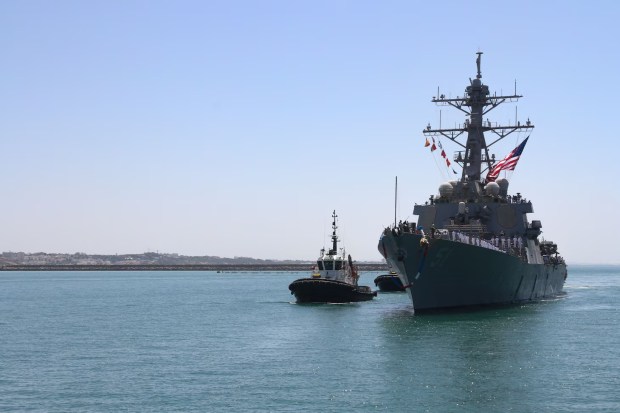
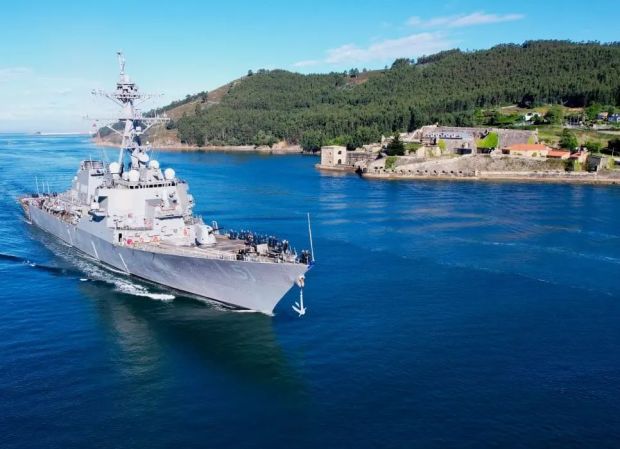
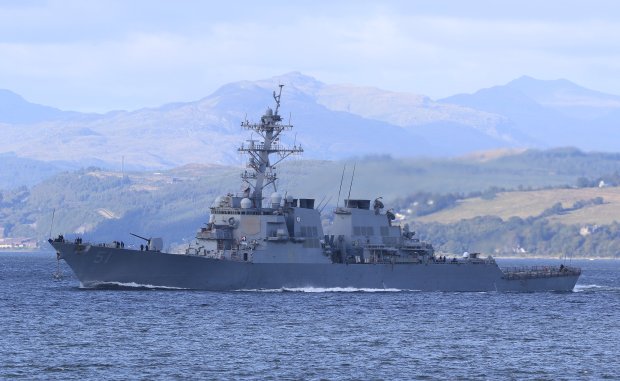
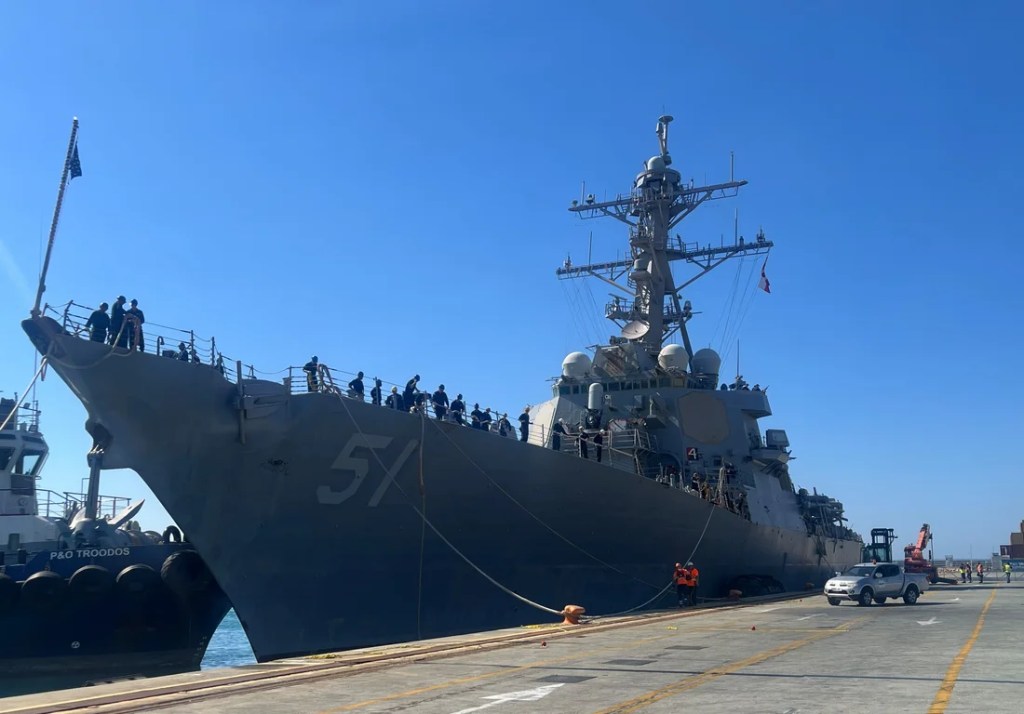
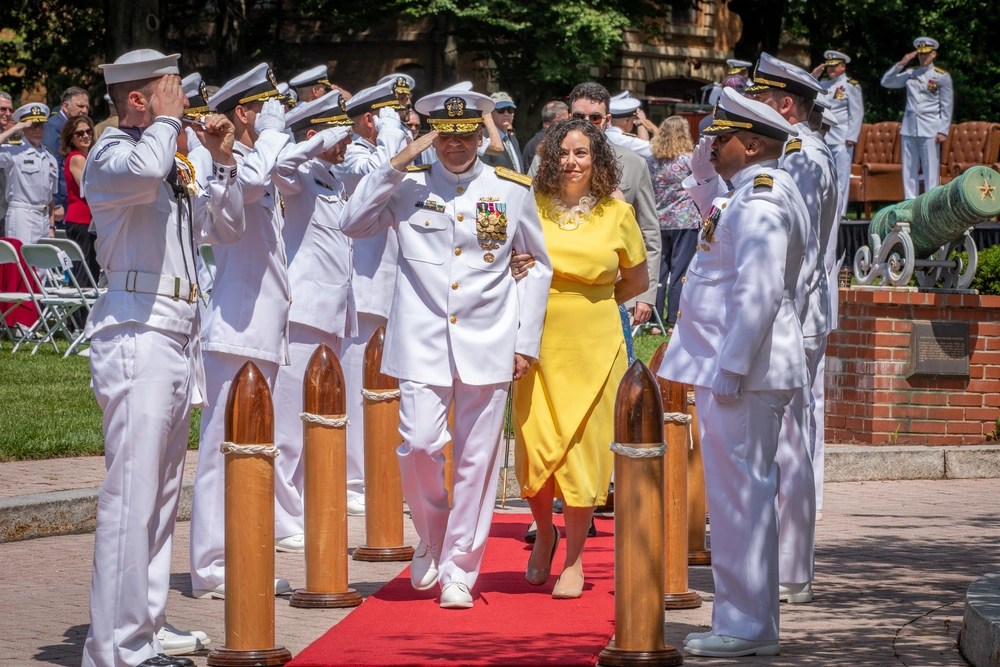
240529-N-GA645-1005 NAVAL STATION ROTA, Spain (May 29, 2024) Sailors man the rail as the Arleigh Burke-class guided-missile destroyer USS Arleigh Burke (DDG 51) returns to Naval Station Rota, May 29, 2024. (U.S. Navy photo by Courtney Pollock)
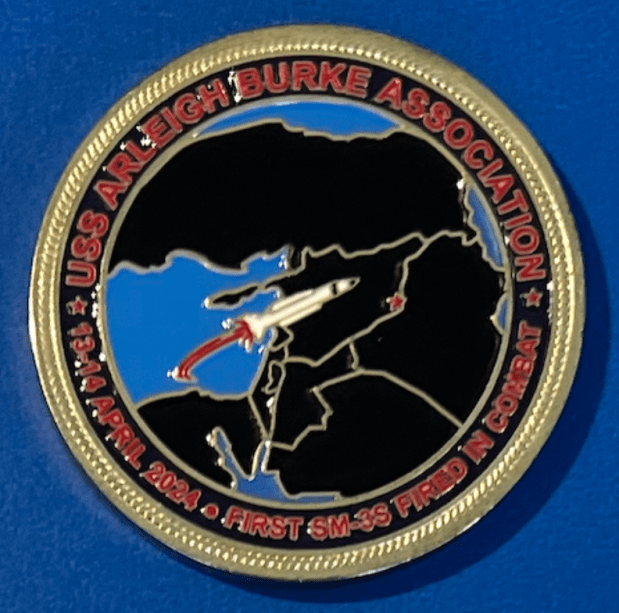
SM-3 Operational Use Coin
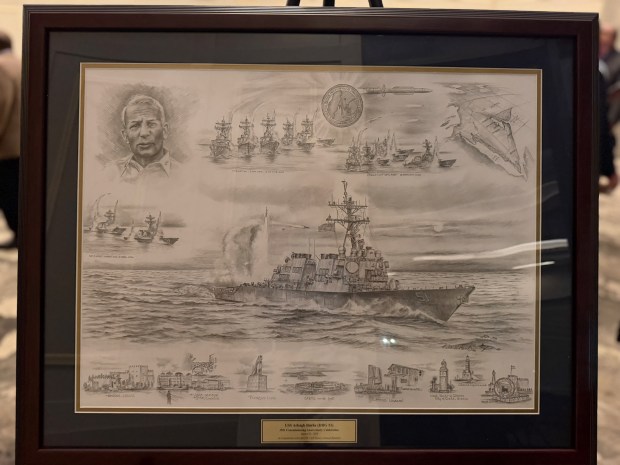
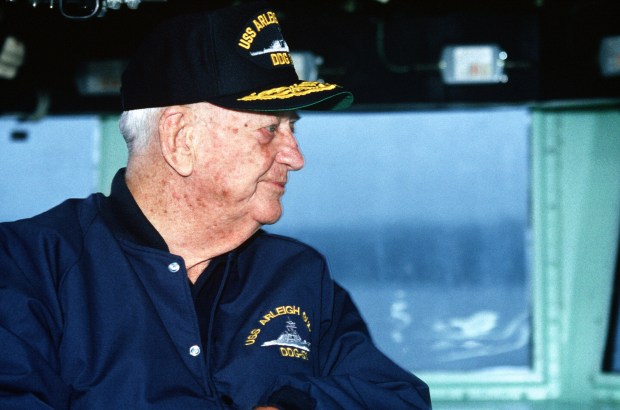
Admiral Burke on Trial A
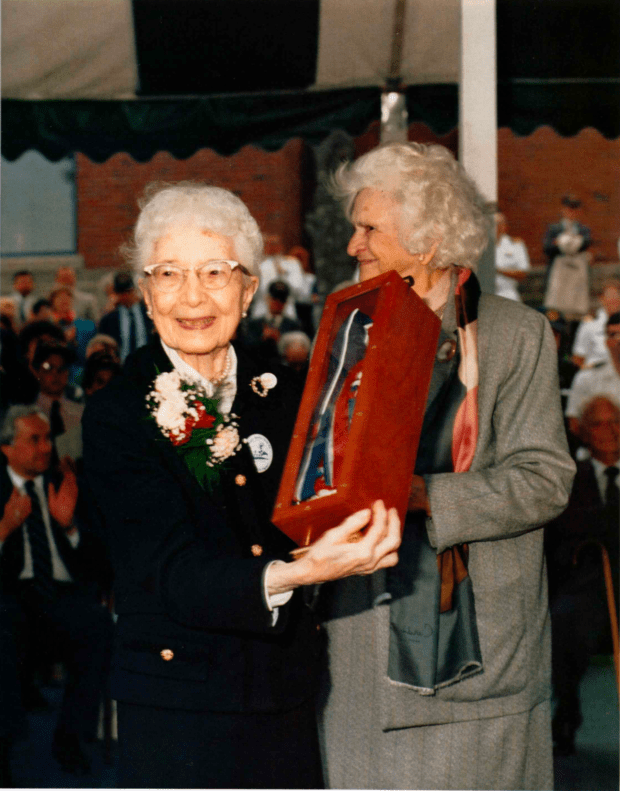
Christening – Bobbie Burke & Wilma Miles
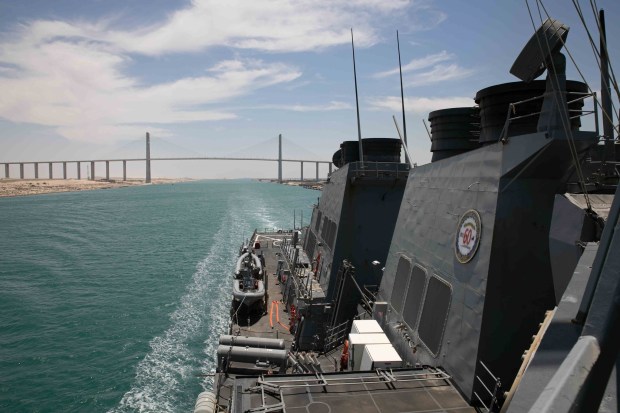
Suez Canal – May 2023
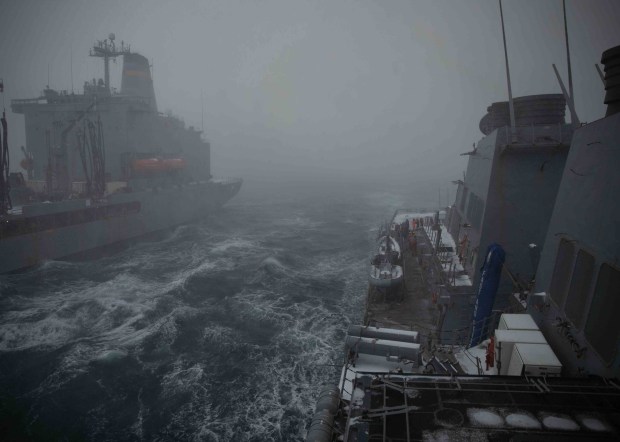
North Sea Unrep – May 2023
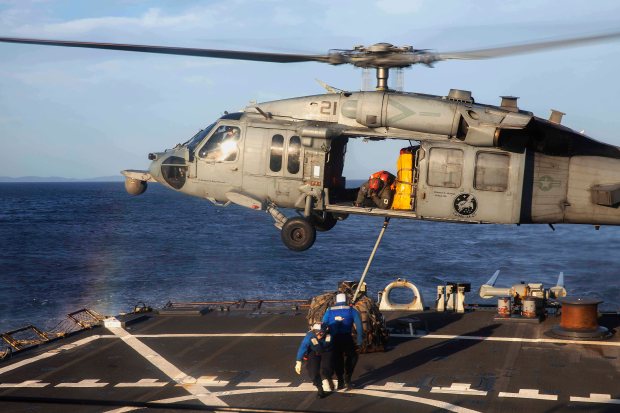
Vertrep – Jan 2024 – Med Sea
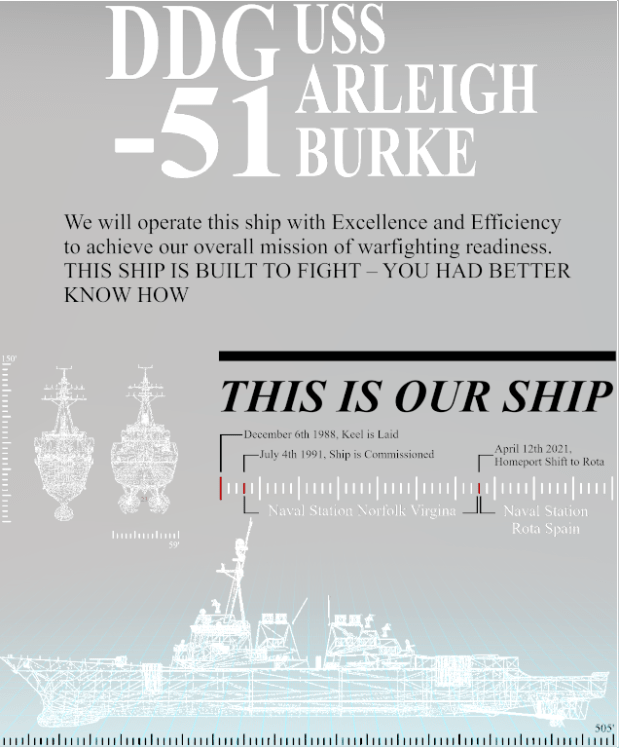
2024 MWR T-shirt design
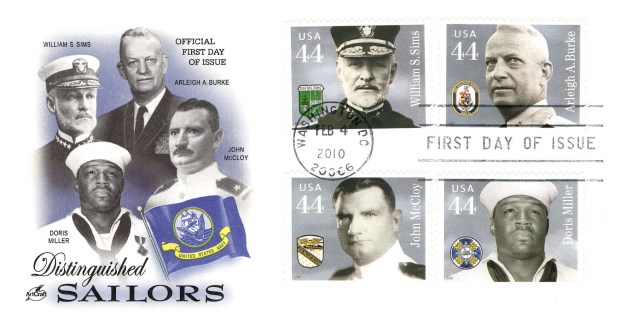
USPS – Distinguished Sailors – First Day Cover
BIW Sea Trials Capt Earl Walker & Capt Morgan
2022 – Nice – visit by RADM P. A. Dur, the ship’s first Battle Group Commander.
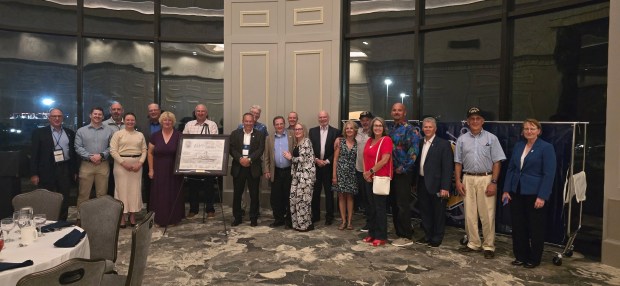
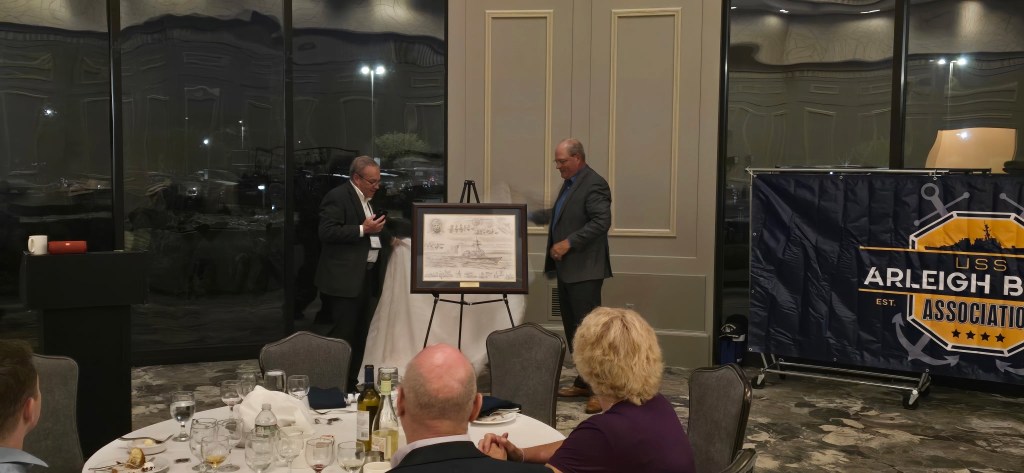
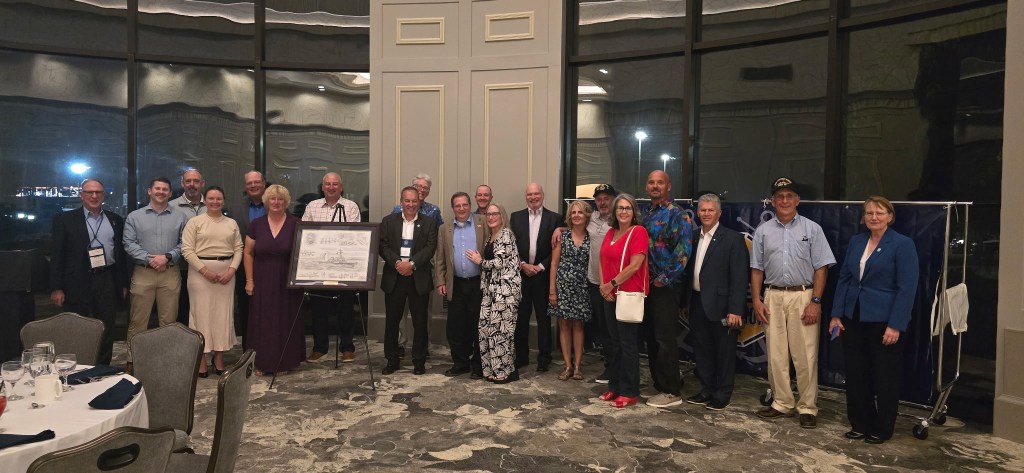
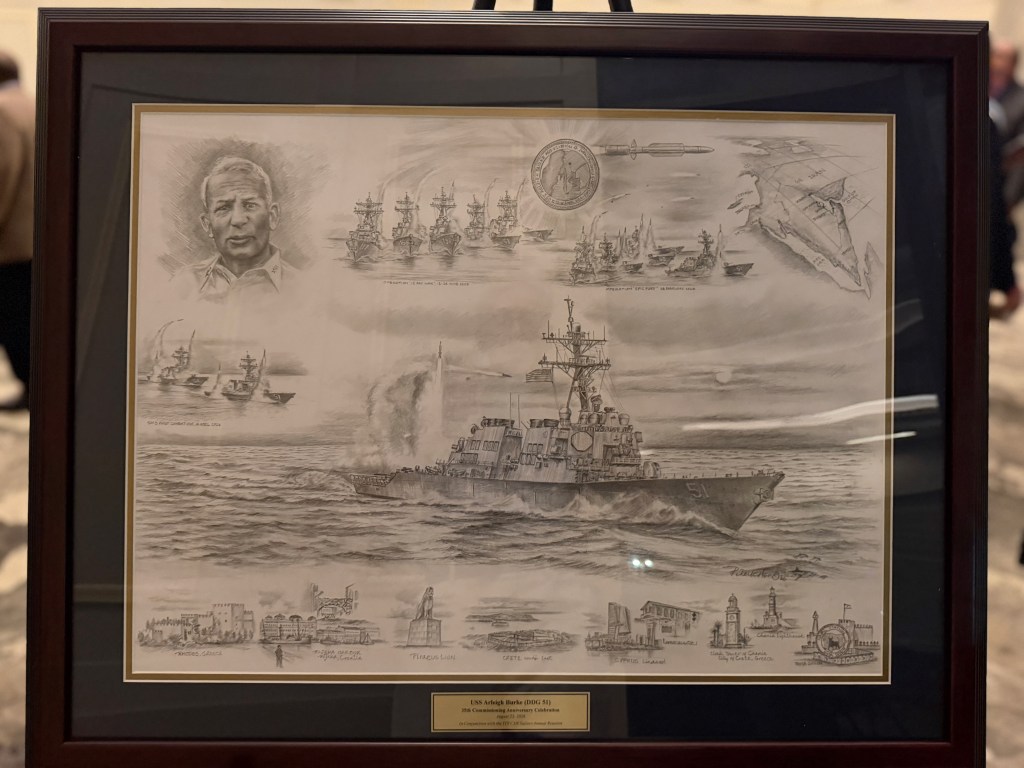
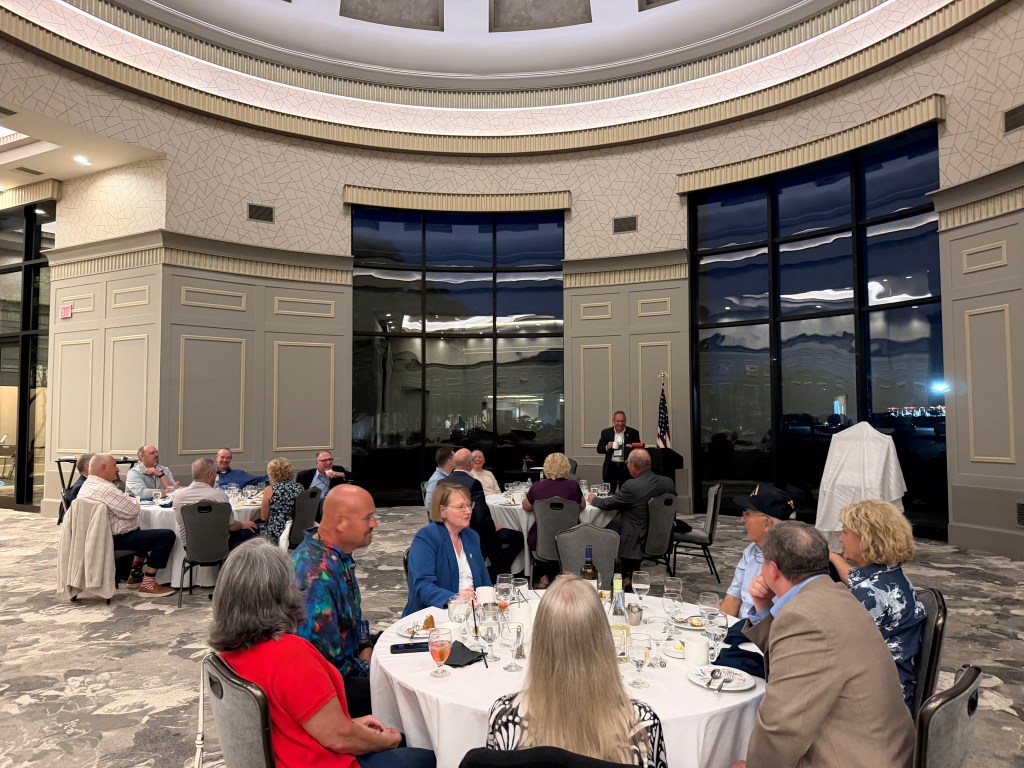
The 35th reunion dinner was held on Aug 23rd, in conjunction with the Tin Can Sailors Association annual convention, at the Crown Plaza in Warwick Rhode Island. Read more here
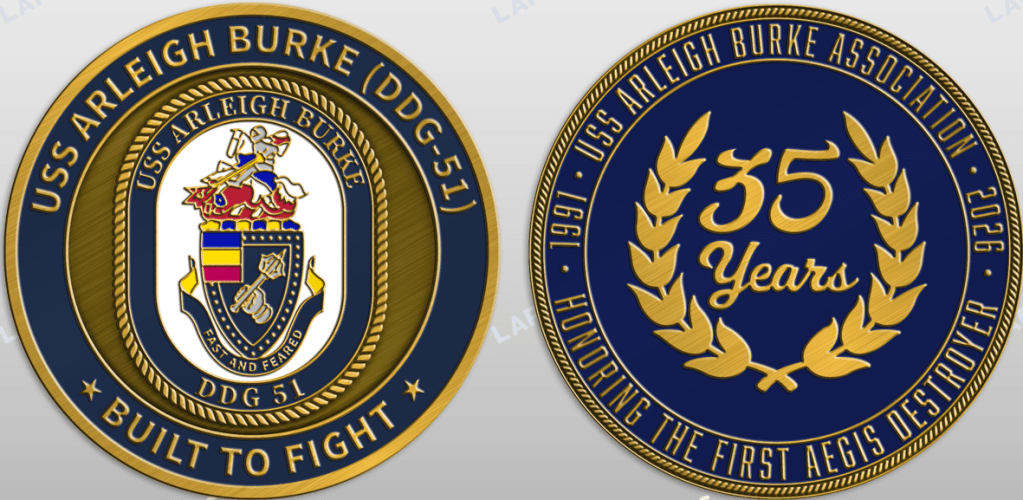
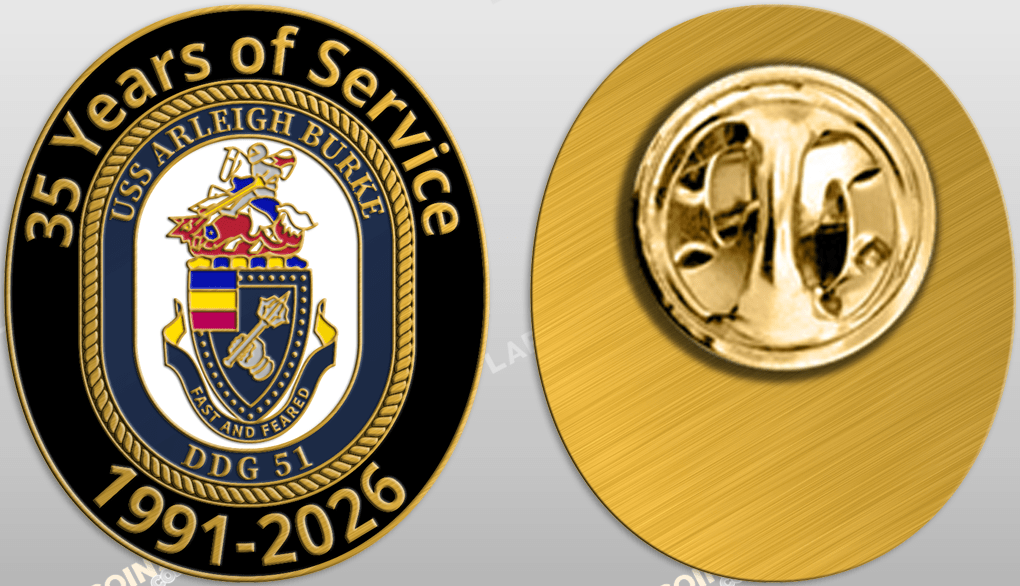
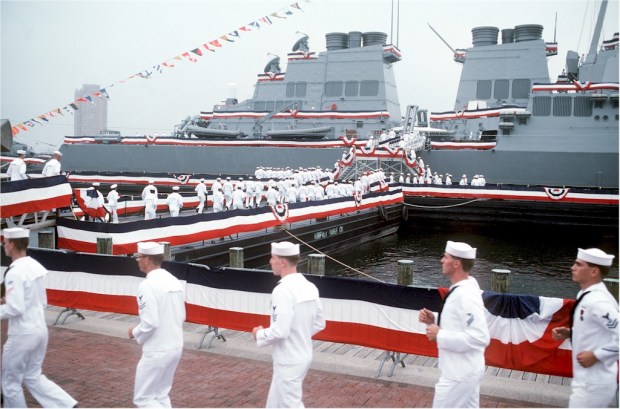
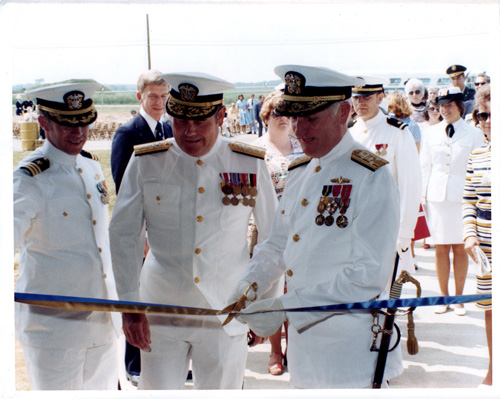
Thirty five years ago today, a crew assembled in Norfolk VA to bring a new warship to life. Under hot and somewhat rainy skies, the national anthem was sung, some speeches were made, the ship was manned and brought to life, with reception following.
In some perverse ways, it seemed like we were on the sidelines – sitting out Desert Storm, working in a shipyard while the rest of the Navy was employed in the success of Desert Storm, returning to a true hero’s welcome. But, as Captain Morgan would like to say, we were doing something of consequence. Little did we know then just how consequential it would become.
The word “FIRST” is used way to often in the Navy. Yes, we were the first, but more important than being first, and being an initial success, we laid the foundation for enduring success of the ship and the class. More than 30 years later, the ship set another first – initial use of BMD capability in combat.
Thirty five years after commissioning, ARLEIGH BURKE is forward deployed, having just pulled into Limassol, Cyprus, for a port visit. The ship remains forward deployed, capable, and operationally relevant.
Arleigh Burke arrives in Limassol, Cyprus, July 2026
While the precom crew did have an impact, we started with the foundation laid by the the TICO class cruisers, the robust design and construction of the ship, and follow crews continued to build on that foundation.
As we celebrate 35 years, and look forward to 40 years, we are working to build a list of all our shipmates that served in the ship. If you are not receiving Arleigh Burke association emails, please join the conversation.
We have lost another true hero of AEGIS BMD — RADM George Meinig has cast lines ashore on his final voyage.
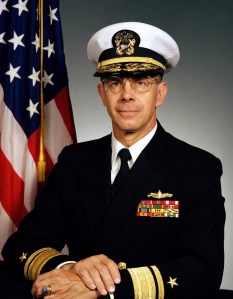
RADM George Meinig, Jr November 8, 1936 – April 30, 2026.
I probably first encountered RADM Meinig shortly after 9/11/2001, when I joined the small Navy Theater Wide Program office.
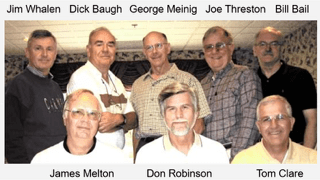
George was a member of the Navy Theater Wide (NTW) Senior Advisory Team (SAT), headed by RADM Meyer. The SAT was an assemblage of gurus probably never equalled in their knowledge of Navy Weapons and Missile Systems – RADMs Meyer and Meinig, George Threston, Milt Silvera, Jim Whalen, Capt Fritz Wendt, Marion Oliver, among others.
This was not a pontificating group (well, on occasion, esp FOA), but a group that would proactively identify weakness in the program, then roll up sleeves and get to work on corrective action, working directly with industry, labs, HQ, or the front office as needed.
We had a term in AEGIS BMD – Blue Collar Captains – senior officer knowledge and experience combined with a junior officer roll up your sleeves and solve the problem while not worried about getting dirty approach. The SAT did not have exclusive claim to the Blue Collar Captain title, we had other examples in Anteon and BecTech.
While an Admiral by rank, George was a true Blue Collar Captain. He helped tackle some of the knarly technical and organizational challenges facing the program.
Hard to remember now, but late 2002 into 2003 was a time of program turmoil: — The Aegis Project was being disassembled, — Missile Defense was gaining priority, eventually with a Presidential Directive to deploy by 9/30/04. — The NTW Program Manager had departed for a headquarters position, leaving the program in the hands of an untested1, acting Technical Director. — We had a new Program Director inbound. — Program personnel were flux, not knowing if we were NavSea or BMDO / MDA,2 going to be retained in the program, promoted, or put in the NavSea Placement Program. — NavSea was stuck in a hiring freeze, even downsizing, with a directed personnel placement program, when we desperately needed more folks to achieve the deployment date. — In Feb 2003, we were redirected from an “engagement” initial capability (with SM-3) to a LRST initial capability, supporting GMD, a completely new type mission area, starting with a blank white board. — Mostly forgotten now was that NTW was envisioned as a mere gap filler, intended to be replaced after a production run of 12 (or maybe 24) missiles by the Kinetic Energy Interceptor. KEI was, like most PowerPoint programs, a “perfect” program, untarnished by any real data, and AEGIS BMD was under continuous attack by the KEI PM. — the list goes on …
George was an anchor though this chaos. In particular, he helped focus leadership on the battles that really mattered in achieving the 9/30/04 deployment directive, while building a program office on the fly, deftly switching focus to the latest technical challenge when required3. The fact that AEGIS BMD survived the chaos, deploying on schedule, then becoming the ascendant BMD capability, with an enviable test success record, was in no small part to his help keeping leadership focused.
The AEGIS BMD Pathfinder Award honors the contributions made to the nation’s defense by persons instrumental in the acquisition or operationalization of naval ballistic missile defense systems
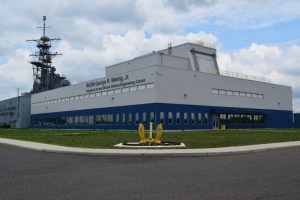
In Oct 2019, the new CSEDS4 annex at Moorestown was named in his honor:
RADM George R. Meinig, Jr. Integrated Air and Missile Defense Engineering Center
As our program YNCS, retired, observed, it is going to make quite an acronym. I think that was also the impetus for the last loonie-gram5.
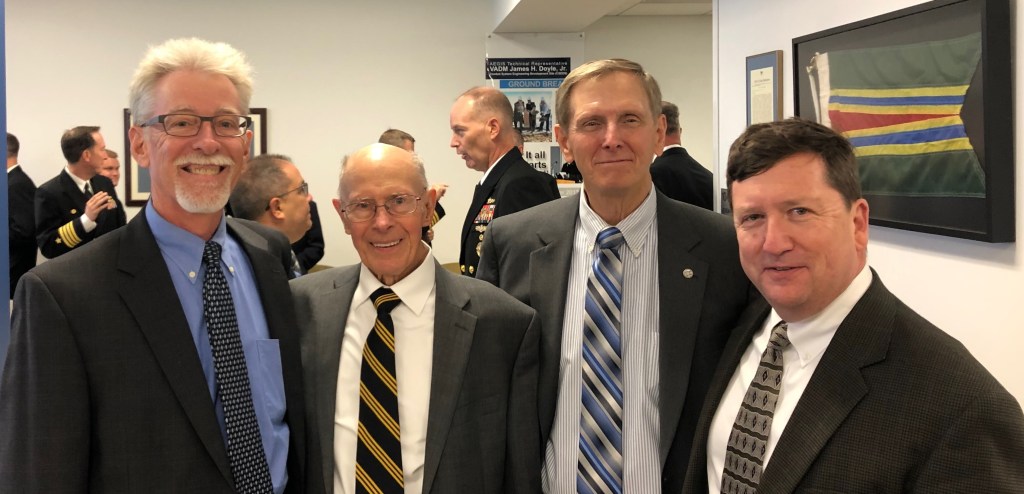
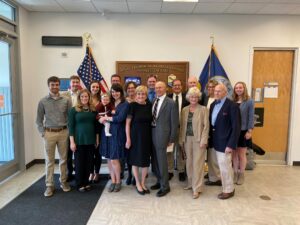
RADM Meinig at the CSED Dedication with two other AEGIS BMD heroes – Jack Ransbotham (2nd from right), Bob Reichert (right)
Personally, George was an anchor for me. He spent a lot of time listening, mentoring, and doing his best to keep me out of trouble – a typically doomed effort. On the most difficult day of my Naval Career, he stood with me, along with three others. (Been 20+ years, so I am finally trying to write the story – stay tuned.)
I’m very sorry to relay the news that RADM George R. Meinig, USN(Ret.) passed away on 30 April.
He was instrumental in bringing many of our air and missile defense systems to reality as an engineering duty officer, with decades of service in NAVSEA and PMS 400.
His calm but determined demeanor was the “yin” to RADM Meyer’s “yang” in the heydays of AEGIS in the 1970s and 1980s.
He was a warm man, loved his family dearly, and spent lots of time mentoring younger officers and civilians.
The Navy honored RADM Meinig by naming the Integrated Air and Missile Defense Center in Moorestown, NJ after him in 2019.
Troy Kimmel May 13th e-mail to AEGIS friends
We have seen our AEGIS BMD Destroyers in the news frequently in the last few years, starting with Arleigh Burke’s first successful operational use of AEGIS BMD / SM-3, continuing through ongoing Middle East Events. George had a huge hand in the success of the AEGIS Weapon System, the Destroyer, and the SM-3. Our Sailors are relying on his contributions, even if they do not know his name. And for those keeping a complete record, his contributions also included the Phalanx systems, RAM, and SeaSparrow, among others.
We have lost a giant, one whose contributions to AEGIS BMD are not easy to summarize, and even less easy to overstate.
2003 AEGIS InfrastructureRADM Meinig family 2019 CSEDS
i.e, exactly zero relevant program office experience. No one in their right mind should have left this knuckle-head in charge. And not the last time this happened – see $183M in the hole and counting↩︎
As ADM Rickover learned, having two hats turned out useful, no one know which one you are wearing. Became one of the contributors to AEGIS BMD Success↩︎
The one written SAT missive from RADM Meinig I was able to find on short notice was to the incoming Program Director, ca Feb 2003, before they transferred their flag to AEGIS BMD, laying out the challenges facing the program, and endorsing the untested, acting TD, in place of changing leadership. I am afraid most of his numerous missives are irretrievable on the old outlook PST files that defy current efforts to decode. At least I had printed one. ↩︎
Combat Systems Engineering and Development Site ↩︎
RADM Anderson recently retired as PEO Ships, also having served as ComNavSea (acting). He served as MPA, coordinating the first two availabilities for the DDG51 class.
He was recently hired as President of Hanwa US Shipbuilding, and will lead the revitalization of the former Philadelphia Shipyard.
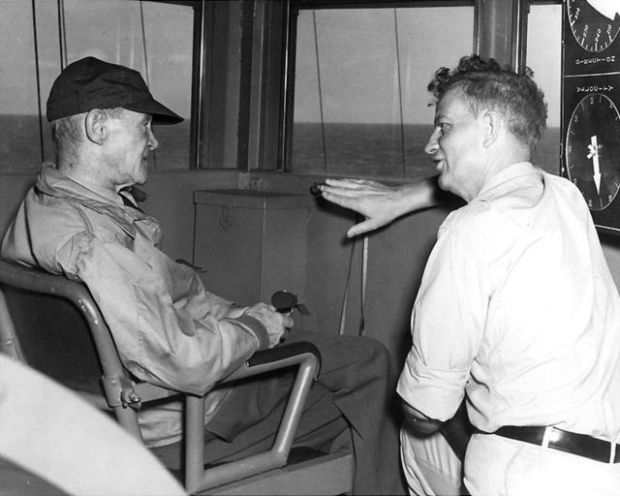
With Mitscher on bridge of USS RANDOLPH (CV 15), during operations off Okinawa in June 1945
In 1944, Admiral Burke was Chief of Staff to Commander Carrier Division THREE, Vice Admiral Marc Mitscher.
In the retaking of Saipan in June 1944 (Operation Forager), when the Japan main fleet appeared, Admiral Spruance did not release Admiral Mitcsher from covering the invasion to pursue the Japan main fleet. This reluctance to release the carriers for pursuit greatly irritated the Mitscher’s aviators, who believed this was the black-shoe ignorance of full capabilities of the new fast fleet carriers. Even as the main Japan force approached, Spruance did not allow Mitscher to position his force for a dawn launch.
Mitscher was very upset. Admiral Burke, Mitscher’s Chief of Staff, made a pact with Truman Hedding (the former Chief of Staff) that they would forevermore commemorate the anniversary of June 19th by getting together and crying in our beer.
However, this event led into the Battle of Philippine Sea, including the Marianas Turkey Shoot, which ended Japan’s fleet air capability.